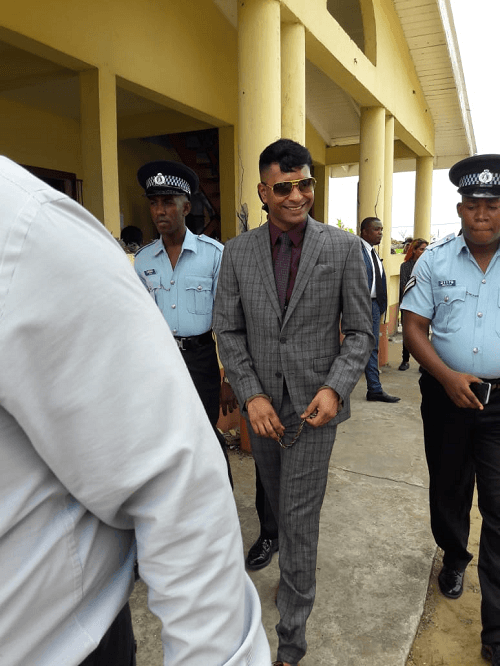
“Nobody expected a tragedy” – THD’s Assistant Traffic Superintendent Michelle Reid
November 26 2026
Nobody expected a tragedy, THD official says after testifying she saw irregular loading on MV Barima but did not act on it
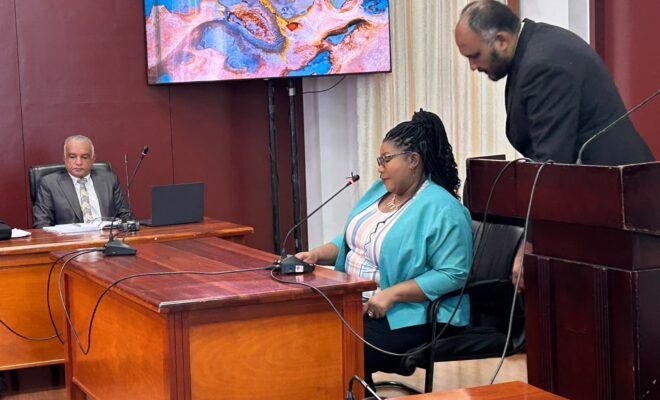
Assistant Traffic Superintendent Michelle Reid has told a Commission of Inquiry that while she observed unusual cargo placements aboard the MV Barima prior to its sailing, she ultimately did not intervene because “nobody expected a tragedy.”
During her testimony regarding the loading operations on July 18, 2026, Reid admitted to noticing several irregularities at Goods Wharf, including fertilizer bags and potatoes placed on the passenger accommodation deck after the cargo hatch had already been sealed two days earlier.
Reading from a July 20, 2026 report she submitted to acting Traffic Manager Stefan Skekel, admitted into evidence as MR2, Reid said she arrived at Goods Wharf around 11:00 a.m. to 11:27 a.m. and observed that the hatch was closed, but items were still being taken to the vessel on acceptance by the captain, who was instructing stevedores where to place them.
Reid testified that she saw a tarpaulin pulled down covering the back and side of the upper deck and noticed white bags partially visible behind it, prompting her to question the captain.
“I inquired from the captain, Mr. Price, as to why I’m noticing items like bags on the sides of the upper deck, since only a tiny area was visible from my view, and such items were not to be stored in the passenger’s accommodation. In his response, he stated that he needed weight to the back of the vessel, and the bags were fertilizers that can’t be placed in the hatch. Then someone remarked that all the potatoes were placed there too,” Reid read from her report.
Under questioning, Reid said she heard stevedores mention that about six trays of potatoes were going to the back of the boat, though she could not verify the exact quantity behind the tarpaulin because the stages had been removed and she could not board at that time.
“Because I spoke about the bags already and he said he needed weight to the back of the boat and then if they put the potatoes there, then that qualifies as weight at the back of the boat,” Reid explained.
Reid also testified to seeing other unusual cargo placements on the vessel such as a closed hatch top, an ATV was placed sideways across the top of the closed hatch rather than straight, alongside other packed items. Photographs shown to the Commission depicted PVC pipes and empty five-gallon yellow oil jars/bottles near the life rafts on the navigation deck. Reid remarked, “That’s the first time I noticed that they had the empty five gallon bottles up there and then they had the pipes. They were putting it up there and I’m like, wow, everything changes. Reid stated she also saw trays of vinyl (more than two or five rolls/pieces) being carried toward the vessel and observed someone fetching playground slides out of the old bond area, though she did not see the slides go aboard.
Despite feeling uneasy enough to tell Goods Superintendent Delon Grandison inside the office that “your presence is needed outside,” Reid admitted she did not call acting Traffic Manager Skakel or intervene directly to halt the loading.
“I saw those a bit, looked strange, but I didn’t think through. Nobody expected a tragedy. And then because I was missing for a couple of trips, I don’t know if that was something new that they had started doing and all of that. But it crossed my mind, but just that I did not act on it,” she said.
Reid added that the vessel also carries small quantities of deck cargo for customers disembarking at Morawhanna, where the hatch does not open, such as hard cases of beer and water, soft drinks, 10-kilogram bags of rice, and five-gallon containers of oil.
On the lower deck, which Reid walked through around 1:30 to 1:40 p.m. after boarding via the MV Malisha, she saw a white car and a black Toyota Tundra pickup, wooden ice boxes and freezers with items packed on top, a large green generator near the engine room, and cooking gas cylinders stacked three high. While Commissioners pointed to photographs showing boxes packed tightly along the port side near the engine room, Reid maintained there was still a clear walkway along the engine-room wall for her to pass without squeezing.
Reid also acknowledged prior complaints from cargo packers (CBOs) that stacking cargo too high without strapping leads to goods falling during rough seas, though she said crews shift boxes before sailing to prevent a list and secure cargo with ratchet straps prior to departure.