Jail, millions in fines proposed in new waste management control policy
January 23 2025
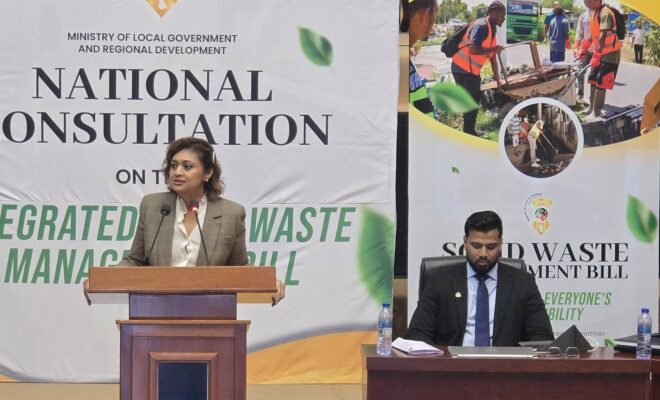
The Ministry of Local Government and Regional Development on Friday hosted a National Consultation on the proposed Integrated Solid Waste Management Bill, signalling a sweeping overhaul of how waste is managed across Guyana as the country’s rapid development accelerates.
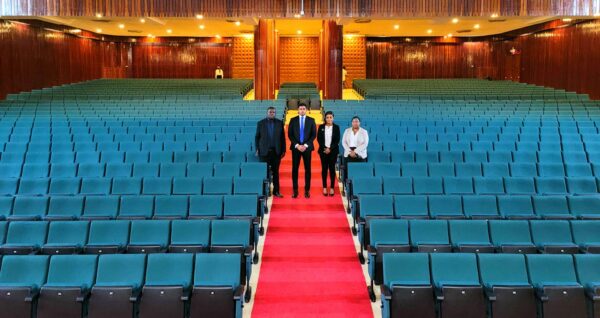
The consultation, held at the Arthur Chung Conference Centre, brought together regional officials from across the country, along with Neighbourhood Democratic Council (NDC) representatives from the East Coast and East Bank of Demerara. Stakeholders were invited to share feedback and help shape legislation that authorities say is critical to Guyana’s sustainable growth.
Key speakers at the engagement included Minister of Local Government and Regional Development Priya Manickchand, Permanent Secretary Miguel Choo-Kang, Director of Sanitation Satrohan Nauth, and UNEP Zero Waste Programme Legal Consultant Romel St. Hill.
In her remarks, Minister Manickchand underscored the urgency of putting comprehensive waste legislation in place, noting that Guyana’s emergence as an oil and gas economy has intensified environmental pressures.
She explained that every sector generates different types of waste, and with increased development comes a sharp rise in disposable waste. Guyana, she stressed, cannot continue to grow without a modern, efficient waste disposal system.
The Minister said the approach must be holistic, involving all sectors and regions, while fostering a stronger waste-management culture—especially among young people—and addressing long-standing community challenges related to dumping and disposal.
She revealed that several regions will be outfitted with modern landfill facilities designed to properly separate and dispose of waste. These facilities, she said, will not be traditional dumpsites but modern landfills built to international standards. Plans also include initiatives to convert waste into fertilizer, energy, and recyclable materials.
Manickchand reaffirmed the government’s commitment to inclusive consultations, assuring stakeholders that all feedback will be recorded and considered as the legislation is finalised. She urged citizens and institutions to actively participate, describing the process as a key opportunity to help shape Guyana’s future development.
Following the consultations, the bill will move to the Attorney General’s Chambers before being submitted to Cabinet and Parliament. The rollout will include training, capacity building, and phased implementation.
The projected timeline estimates six months for drafting and validation, 12 months for parliamentary approval, and 18 months for full operational transition—marking what officials describe as the most significant transformation of Guyana’s waste management system to date.
Guyana’s draft Integrated Solid Waste Management legislation seeks to overhaul a fragmented and outdated waste system marked by weak enforcement, overlapping mandates, and serious environmental and public health risks. The bill proposes tough new penalties, including fines exceeding $2 million and prison sentences of three to five years for serious violations, supported by a graduated enforcement approach.
Key measures include stronger regulation of e-waste and oil and gas waste, mandatory financial guarantees for waste operators, and the introduction of Extended Producer Responsibility to fund recycling and recovery. Grounded in international best practices, the legislation promotes a circular economy through waste prevention, reuse, recycling, and recovery, positioning disposal as a last resort.