CoA upholds life sentence for ‘Roachie’
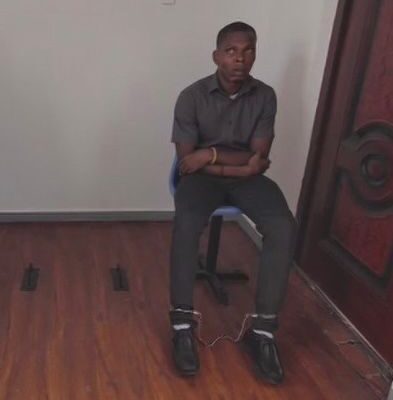
The Court of Appeal of Guyana has upheld the life sentence of Delon Abrams, also known as Roachie, who had pleaded guilty to fatally shooting Detective Corporal Seburn Elias.
The unanimous ruling, delivered last week, confirmed that Abrams will serve a life sentence, though he will now be eligible for parole after 18 years.
This decision modifies the original sentence handed down in 2018, which had denied him any possibility of parole.
The fatal incident occurred on January 6, 2014, when Abrams shot and killed Elias, who was performing his duties as a member of the Guyana Police Force (GPF).
At the time of his conviction, Abrams, who is now in his 30s, pleaded guilty to the lesser charge of manslaughter. He was sentenced to life imprisonment without the possibility of parole by Demerara High Court Judge Sandil Kissoon.
Abrams, dissatisfied with the severity of the sentence, appealed through his attorney, Keoma Griffith, arguing that the life sentence was disproportionately harsh and inconsistent with established sentencing guidelines.
The appeal was based on the contention that the trial judge had failed to set a parole eligibility period, as required by the Criminal Law (Offences) Act.
Justice Yonette Cummings-Edwards, Acting Chancellor of the Judiciary, delivered the Court of Appeal's decision. She agreed with the defence that the original sentence was excessive and that the trial judge erred by not establishing a parole eligibility period.
Justice Cummings-Edwards emphasised the importance of considering rehabilitation in the sentencing process, noting that a life sentence without parole does not allow for that.
She cited relevant case law and the Needham’s Point Declaration, which underscores the dual objectives of sentencing: deterrence and rehabilitation.
In adjusting the sentence to include parole eligibility, the Court of Appeal upheld the life imprisonment term, noting that it was appropriate given the gravity of the crime.
The appeal was heard by a panel that included Justices of Appeal Dawn Gregory-Barnes and Rishi Persaud, along with Chancellor Cummings-Edwards. Dionne McCammon, Assistant Director of Public Prosecutions, appeared on behalf of the prosecution.
The events leading to Abrams’s conviction began when he was rescued by police from a violent attack by residents of Sophia, Greater Georgetown.
Abrams was initially taken to the Turkeyen Police Station but was later taken to the Turkeyen Health Centre and then to the Georgetown Public Hospital due to the severity of his injuries.
While at the hospital, Abrams requested to use the washroom, and a police officer uncuffed him to allow this. After his return, Abrams asked to use the washroom again, and the officer granted his request.
It was during this second visit that Abrams managed to disarm the officer, seizing his service weapon, and subsequently escaped from custody.
Following his escape, police received information on Abrams’ whereabouts and traced him to a yard on Fourth Street, Alberttown, Georgetown, where he was hiding.
When Elias, who was unarmed at the time, entered the yard to apprehend Abrams, he was shot twice with the stolen weapon.
At the time of the confrontation, Abrams was the only person armed.