Albania erupts in riots as protesters demand Prime Minister’s resignation
October 20 2026
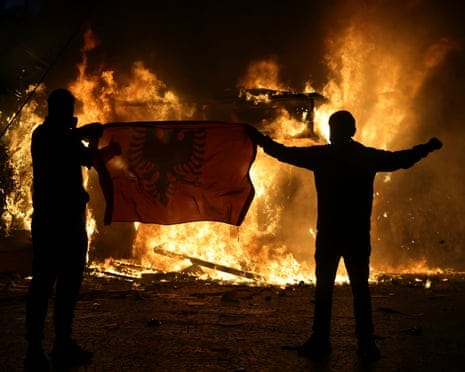
Albania is facing a wave of violent anti-government protests, with thousands of demonstrators taking to the streets of the capital, Tirana, demanding the resignation of Prime Minister Edi Rama amid growing allegations of corruption, economic hardship and dissatisfaction with public services.
The demonstrations, which intensified in mid-October, have seen protesters clash with riot police, set fires, smash storefronts and damage government buildings. Security forces have responded with tear gas, water cannons and other crowd-control measures as unrest continues to challenge the government.
According to the Associated Press, riots on October 14 resulted in damage to at least four government ministry buildings. Authorities initially reported that 23 police officers and six civilians had been injured, while 35 people were detained. Subsequent reports indicated that the violence and arrests continued as demonstrations spread.
The latest escalation has drawn significant participation from high school and university students, who are demanding education reforms, lower education-related costs, better employment opportunities and action against corruption.
The demonstrations have also become part of a broader movement calling for Rama to step down. The prime minister, who has led Albania since 2013, has rejected calls for his resignation and accused political opponents of contributing to the unrest.
Reuters reported on October 16 that thousands of young Albanians marched through Tirana during the fourth day of an increasingly violent, student-led campaign. Demonstrations that began largely peacefully have escalated after protesters said their concerns had been ignored for months.
Public frustration has also been fuelled by opposition to a proposed luxury tourism development on Albania’s Adriatic coast associated with Jared Kushner, the son-in-law of US President Donald Trump.
The proposed project has drawn criticism from environmental activists and protesters concerned about development in an ecologically sensitive coastal area known for its wildlife, including flamingos.
The dispute helped inspire the so-called “Flamingo” protest movement, which initially focused on environmental protection but has broadened into a wider campaign against alleged corruption and government accountability.
The movement reflects mounting concerns that major development projects could benefit powerful private interests while placing environmental resources and public interests at risk. The government has defended its development agenda, arguing that investment can support economic growth.
The unrest has raised concerns about public safety and Albania’s ambitions to join the European Union. According to Reuters reporting published on October 18, police said 388 people had been charged with criminal offences during the demonstrations, while scores of officers and protesters had sustained injuries. The reported figures cover the unrest up to that point and may change as authorities release further updates.
The European Commission has condemned violence while reaffirming the importance of protecting peaceful demonstrations and freedom of expression. The unrest has also prompted concerns about allegations of excessive force by police against demonstrators and journalists.
Despite the mounting pressure, Rama has refused to resign, arguing that the unrest threatens Albania’s efforts to secure EU membership. His government faces the challenge of restoring order while addressing public concerns over corruption, education, employment and the country’s development priorities.
As demonstrations continue, the situation remains tense, with uncertainty over whether dialogue between authorities and protesters can prevent further violence.