Barima cargo was never weighed before loading, forklift operator tells CoI
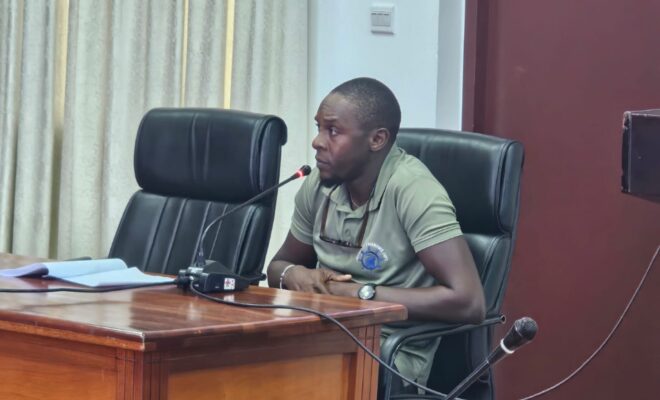
T&HD forklift operator tells Barima CoI cargo weight is never checked
November 27 2026
Cargo loaded onto the MV Barima was never weighed before being placed aboard, a Transport and Harbours Department (T&HD) forklift operator revealed during testimony before the Commission of Inquiry (CoI), which is in contrast to an earlier October walkthrough of the facility.
Senior forklift operator Tromain Duncan, who operates a ten-ton forklift at the Georgetown wharf and has worked with the department for roughly seven years, told commissioners that neither the bond nor his machinery tracks the weight of goods moved onto the vessel. Asked directly whether there is any weighing of loaded trays before he transports them to the ship, Duncan answered, “No, sir.” He added that his forklift has no load meter, saying he would “never know” the weight of the cargo he carries.
This witnesses spoke to details the five-member panel named by President Irfaan Ali had already seen with their own eyes, during an October tour of the Transport and Harbours Department goods wharf along Water Street in Kingston. The Ministry of Public Works facility looked newly tidied up ahead of the Thursday inspection.
Beneath a canvas tent stood a weighing scale that onlookers suspected was arranged largely for show. Closer inspection of the hardware labels and loose wiring showed the unit lacked a link to any readout screen, leading a CoI commissioner to call the apparatus “brand new”.
During his subsequent questioning by the commissioners, Duncan admitted he could not state the weight of heavy items moved onto the vessel, including seven large wooden ice boxes and a wooden gangway loaded at the end of operations, nor could he say how light an all-terrain vehicle placed on top of the hatch was. When asked whether he could tell from experience if a ship was carrying a heavy load based on the volume of cargo or number of trips made on July eighteen, Duncan said, “I wouldn’t be able to say,” and later added, “I wouldn’t be able to figure that out.”
Duncan explained that workers pack goods by row or quantity onto six-by-four-foot or four-by-four-foot pallets, such as about twenty or twenty-one standing twenty-pound gas cylinders or stacked rows of drink cases, rather than by weight.
He further testified that he does not prepare manifests or keep records of goods, and that while heavy building materials like zinc and steel rods are sometimes taken directly to the wharf by vehicles to ease loading, he had no knowledge of when the vessel reached its maximum load unless instructed by superiors to return excess cargo to the bond.