Special Branch Chief admits to monitoring Azruddin Mohamed
September 28 2026
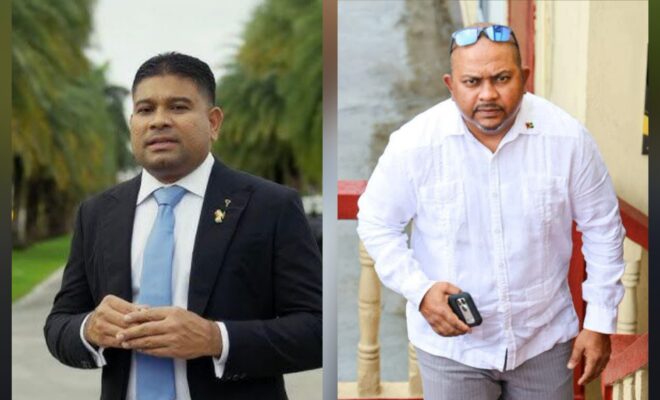
Under continued questioning from defense attorney Siand Dhurjon, the Senior Superintendent of Police and Head of the Special Branch, Prem Narine today admitted under court compulsion that police had kept Azruddin Mohamed under direct surveillance, a revelation that defense counsel argued points to political targeting and state-sponsored intimidation.
During the court session, Dhurjon probed whether the Special Branch chief had ordered the monitoring and surveillance of Azruddin Mohamed prior to the issuance of extradition warrants.
Initially, Senior Superintendent Narine attempted to evade the line of questioning, citing obligations under the Official Secrets Act, “As a result of the Secrets Act that I signed to, I don’t think I can answer that,” Narine told the court.
Defense counsel immediately appealed to Chief Magistrate Judy Latchman to compel a response, arguing that nothing in the Official Secrets Act prohibited answering questions regarding law enforcement surveillance of a citizen. The court upheld Dhurjon’s submission and ordered the witness to answer. “Yes,” Narine conceded to the courtroom.
However, Narine strongly denied defense assertions that the surveillance was directed by executive authority, specifically rejecting claims that President Irfaan Ali had instructed the Special Branch to target Mohamed or his family.
Defense Counsel Siand Dhurjon: “You were instructed to keep Azruddin Mohamed under surveillance by none other than His Excellency.”
Senior Superintendent Narine: “That is not true.”
Defense Counsel: “Who instructed you to keep Azruddin Mohamed under surveillance?”
Senior Superintendent Narine: “No one instructed me… I had a reason to do it.”
Narine further maintained that he never transmitted monitoring reports or findings to external political authorities.
The cross-examination also featured exchanges between defense attorney Dhurjon and State Prosecutor Herbert McKenzie, who repeatedly objected to the line of questioning as irrelevant to the core extradition matter.
The defense asserted that the Guyanese government has systematically used state apparatuses to suppress political opponents, pointing to public statements made by Nazar Mohamed (Azruddin’s father) regarding the non-renewal of over 80,000 acres of mining leases and vessel cabotage licenses. Dhurjon presented specific allegations regarding a surveillance fleet deployed against Mohamed during political outreaches across the country, naming several vehicles and license plates allegedly registered to the Ministry of Home Affairs. During political outreaches in Essequibo and Berbice, defense suggested rank-and-file officers followed Mohamed in a white Toyota Allion (plate PAK-1033). Counsel also claimed over 15 Special Branch vehicles, specifically naming Allions PAC-2716, PAG-3188, and PAC-3139, were deployed for tracking. Senior Superintendent Narine rejected the claims outright, “The entire suggestion is wrong. I don’t know the vehicles, and I didn’t cause them to monitor,” Narine responded. When asked about specific surveillance operations conducted in Pomeroon, Rupununi, and the Essequibo Coast during 2025, Narine repeatedly answered that he could not recall.
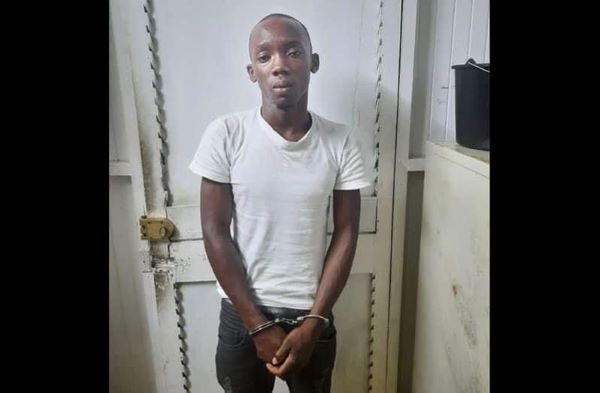
The defense also focused heavily on the mechanics of Mohamed’s arrest on October 31, 2025, attempting to demonstrate that police conducted a targeted, “lightning arrest.”
When asked whether officers knew Mohamed’s exact location immediately after obtaining the arrest warrants from the Magistrates’ Court, Narine clarified that police did not go directly to his location. Dhurjon said “You didn’t have to physically check anywhere. You might have just had to pick up the phone, consult, and make inquiries.” Senior Superintendent Narine then responded with “I picked the phone up and I made inquiries.”
Attempts by Dhurjon to challenge Narine’s credibility based on his rapid career advancement under the current People’s Progressive Party (PPP) administration were shut down by the court following prosecutor objections.
Counsel argued that Narine skipped ranks, moving rapidly from constable up to Senior Superintendent, creating potential bias. The magistrate ruled, however, that questions surrounding officer promotion history were irrelevant to the extradition proceedings and disallowed the line of inquiry. Similarly, the court blocked questions regarding Narine’s personal interaction with the President at local venues, including the Queenstown Masjid, ruling that attendance at places of worship had no legal bearing on the case.