Legal storm grows as 7,000 sue J&J in cancer lawsuits
April 30 2026
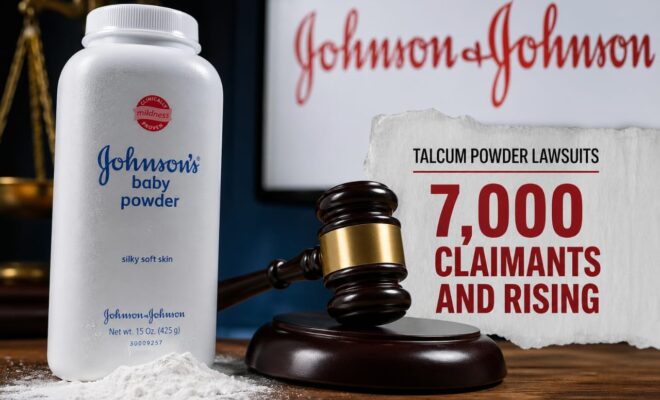
The number of claimants in legal actions against Johnson & Johnson over its talcum powder products has climbed to approximately 7,000 in a key segment of ongoing litigation, underscoring the continued expansion of one of the largest mass tort cases in recent history.
The lawsuits center on allegations that the company’s talc-based products, including its once widely used baby powder, were contaminated with asbestos and contributed to cancers such as ovarian cancer and mesothelioma. Johnson & Johnson has consistently denied these claims, maintaining that its products are safe and do not cause cancer.
The increase to 7,000 claimants represents just a fraction of the broader legal landscape. Across the United States, the company is facing tens of thousands of similar lawsuits. Court filings indicate that more than 67,000 plaintiffs have brought claims alleging harm linked to talc products, with the majority involving ovarian cancer diagnoses.
Legal experts note that the litigation continues to grow despite years of court battles, settlements, and strategic maneuvers by the company. Johnson & Johnson has made multiple attempts to resolve the cases through bankruptcy proceedings tied to subsidiaries, a controversial legal strategy that has been rejected by U.S. courts on several occasions.
Recent verdicts and rulings have kept the issue in the spotlight. Courts have awarded damages in several cases, while others have been overturned or reduced on appeal, reflecting the complex and evolving nature of the litigation.
The controversy has also spread beyond the United States, with thousands of claimants in countries such as the United Kingdom pursuing similar legal action, further intensifying pressure on the company.
Johnson & Johnson discontinued the sale of talc-based baby powder in major markets and has transitioned to cornstarch-based alternatives. However, the company continues to defend itself in court, signaling that the legal battle is far from over.
As the number of claimants rises and cases proceed through the courts, the outcome of this litigation could have significant implications for product liability law and corporate accountability in the global healthcare industry.