Search-and-rescue mission underway in North Atlantic to locate missing Submergible.
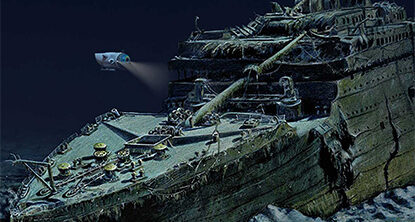
A submergible went missing in the area of the Titanic wreck in the North Atlantic on Monday, setting off a search-and-rescue operation by the U.S. Coast Guard.
According to a report by the New York Times, Petty Officer Lourdes Putnam confirmed that Coast Guard officials were searching for the submersible, which is owned and operated by OceanGate Expeditions.
It is unclear how many people were on board the vessel, but based on information found on the OceanGate’s website, the submersives carry five people.
OceanGate, a company that takes paying tourists in submersibles to shipwrecks and underwater canyons, said on its website on Monday that an expedition was “currently underway.”
After the submersible went missing, the company issued a statement saying that it was exploring all options to bring the crew back safely.
“Our entire focus is on the crew members in the submersible and their families,” a statement said. “We are deeply thankful for the extensive assistance we have received from several government agencies and deep-sea companies in our efforts to reestablish contact with the submersible.”
The chief executive of OceanGate, which was founded in 2009, has compared its project to the burgeoning space tourism industry, and the company has offered tours of the Titanic in which guests paid $250,000 to travel to the wreckage on the seabed, more than two miles below the ocean’s surface.
The company’s website outlines an eight-day itinerary for the trip, setting out from the city of St. John’s in Canada to the site of the Titanic wreck.
The site also outlines a degree of training for the company’s customers, saying they receive “a vessel orientation and safety briefing” and are familiarized with “the vessel’s safety procedures.”
The Titanic sank in the early hours of April 15, 1912, on its maiden voyage from England to New York after hitting an iceberg, killing more than 1,500 people.
The wreckage was found in 1985, broken into two main sections, about 400 miles off Newfoundland, in eastern Canada, and has since attracted the attention of experts and amateurs alike.
The company said that customers do not require any previous diving experience, but that there are “a few physical requirements like being able to board small boats in active seas.”
(New York Times)