National TVET Policy Unveiled to Strengthen Workforce Development

April 3 2025- The Government of Guyana, through the Ministry of Education, has unveiled the National Technical and Vocational Education and Training (TVET) Policy 2025-2035, a landmark initiative aimed at equipping the nation’s workforce with the skills needed to support economic transformation.
With Guyana experiencing rapid growth in key sectors such as oil and gas, climate-resilient agriculture, low-carbon technology, and digital development, the new policy emphasizes the government’s commitment to developing human capital for sustainable and inclusive economic growth.
A Strategic Approach to TVET Development
Developed with support from the World Bank, the policy follows a comprehensive review of the TVET sector, conducted between January and February 2024.
This review assessed governance, financing, quality assurance, and linkages between training institutions and industries, ensuring that Guyana’s TVET delivery aligns with international standards, particularly within the Caribbean region.
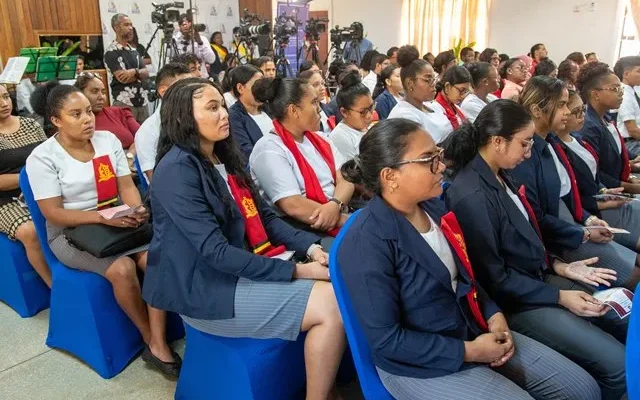
During the launch yesterday at the Arthur Chung Conference Center, Minister of Education, Priya Manickchand, highlighted the urgent need for skilled professionals, including engineers, plumbers, masons, and electricians, to support the maintenance of schools and other national development projects.
She noted that the shortage of skilled labor is not just a challenge for the Ministry of Education but also other government ministries and the private sector.
She further emphasized, “And while this is a ten-year policy, I expect before—because everything is evolving, and evolving so quickly—that there is going to be a review of this. There may be amendments with either deletions or additions, but this is our guiding policy for TVET in Guyana that guides not only us in the Ministry of Education, but it will guide the Ministry of Labor, it’s going to guide the Ministry of Human Services (and Social Security) who does some kind of training with women, it’s going to guide the University of Guyana, the Cyril Potter College of Education—it’s going to guide anyone involved in training our young people.”
World Bank Endorses Policy as Transformational
Jaime Saaverda, the World Bank’s Director for Human Development for Latin America and the Caribbean, described the policy as a transformational initiative that aligns workforce training with Guyana’s rapidly expanding economy.
He emphasized the importance of ensuring equitable access to training programs, particularly for individuals who have not completed secondary education.
Key Features of the National TVET Policy
The policy includes several strategic reforms aimed at strengthening and modernizing the TVET sector, including:
A Unified TVET System – The creation of a single autonomous national institution responsible for planning, coordinating, and regulating TVET in Guyana.
Sustainable Financing – Introduction of a TVET levy in consultation with the private sector, policies for internally generated funding, and incentives for private sector investment in skills training.
Improved Training Conditions – Strengthening collaboration between the Cyril Potter College of Education and the Guyana Technical Institute to enhance TVET teacher training, modernizing equipment and workshops, and improving certification and accreditation standards.
Employment and Entrepreneurship Support – Establishment of Sector Skills Councils to connect training providers and employers, the introduction of skills forecasting frameworks, and expanded entrepreneurship training to help graduates create economic opportunities.
Equitable Access to TVET – Strategies to increase gender participation in all trades, improve access for persons with disabilities, and expand TVET programs in hinterland communities.
Building a World-Class Workforce
The launch of the National TVET Policy 2025-2035 marks a transformative step toward developing a globally competitive skilled workforce.
By enhancing governance, financing, training quality, and employment pathways, the Government of Guyana aims to foster sustainable economic growth and greater opportunities for all Guyanese.
The Ministry of Education acknowledges the contributions of stakeholders and looks forward to continued collaboration to ensure the success of Guyana’s evolving TVET sector.