Historic Moments in Caribbean Football: Jamaica Women’s Team Advances to World Cup Knockout Phase

Football, often considered the world’s most popular sport, has not only been a platform for showcasing athletic prowess but also a reflection of societal changes and gender equality.
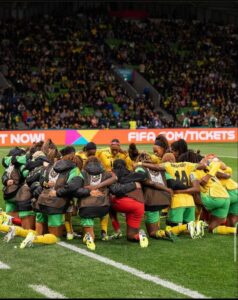
In recent years, the Caribbean region has witnessed significant milestones in female football, including the Jamaica’s women’s team achieving a groundbreaking accomplishment by qualifying for its first-ever World Cup knockout phase.
This remarkable feat, achieved through a draw against the formidable Brazil women’s team, has not only ignited national pride but also highlights the transformative power of female football in the Caribbean and beyond.
The success of Jamaica’s women’s football team in the FIFA World Cup is a testament to the dedication and resilience of the players and coaching staff. Throughout their journey, they faced numerous challenges, including limited resources, a lack of funding, and unequal support compared to their male counterparts.

However, their determination and passion for the sport have shattered barriers and stereotypes, opening doors for future generations of female footballers in the Caribbean.
Qualifying for the World Cup knockout phase showcased the immense potential and talent that exists in this part of the world.
By competing at the highest level of women’s football, Jamaica has provided a source of inspiration for other nations in the region to invest in and promote women’s sports.
Jamaica’s success has had a profound impact on female football in the Caribbean. It has sparked an increased interest in the sport among young girls, encouraging them to pursue their dreams of becoming professional footballers.
With more attention and support being directed towards women’s football, there is hope for the development of grassroots programs and better facilities to nurture talent from a young age.
Moreover, their success has also brought much-needed attention to the gender disparities that exist in sports across the region. It has prompted discussions about the need for gender equality in sports funding and opportunities.
As more resources are allocated to support female football, the talent pool in the Caribbean will grow, leading to even more historic runs on the international stage.
Changing Landscape of Female Football
Jamaica and Morocco’s historical runs in international competitions reflect a shifting landscape in women’s football.
While traditional football powerhouses like Brazil and Germany have faltered in the group stages, it has allowed other nations, historically overlooked, to seize their moment on the global stage.
The rise of Jamaica and Morocco demonstrates that with proper investment, coaching, and infrastructure, countries with lesser-known footballing histories can excel and make a significant impact in the world of women’s football.
This newfound competitiveness signals the evolution of female football as a global sport, with nations from diverse backgrounds contributing to the game’s growth and popularity.
Jamaica qualifying for the World Cup knockout phase and the historic runs made by Morocco and other less-fancied nations reflect a changing narrative in women’s football.
These achievements highlight the potential for growth, progress, and gender equality in the sport. As nations in the Caribbean region continue to invest in and support their female footballers, they pave the way for a brighter future for women’s sports in the region and beyond.
The collective success of Jamaica and other emerging footballing nations is a testament to the transformative power of female football and the positive impact it can have on societies and communities worldwide.