CoA Reduces Jail Time for Men Convicted in 2007 Septic Tank Murder

The Court of Appeal has significantly reduced the sentences of two men initially handed lengthy prison terms for the 2007 murder of Colleen Forrester.
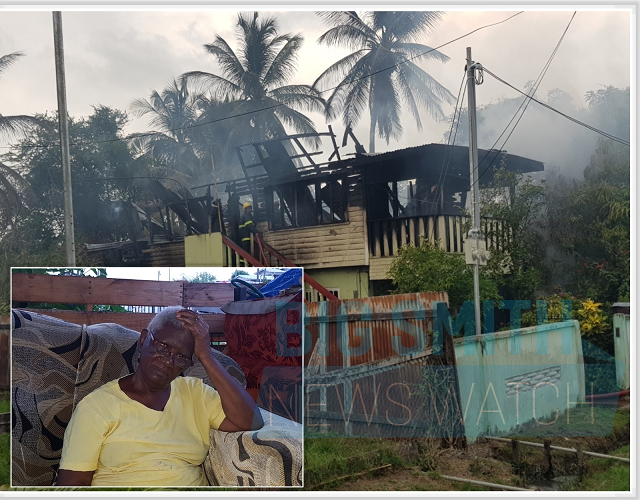
The 56-year-old caretaker’s decomposing body was discovered in a septic tank at her Campbellville, Georgetown home.

Dead: Colleen Forrester
After being convicted by a jury in 2015, Anthony Hope, known as “Papa,” and Ralph Tyndall, called “Nick,” were sentenced to 62 and 55 years respectively.
Then presiding trial judge, Justice Roxane George, SC, who is now the Chief Justice, had ordered that Hope would only be eligible for parole after serving 40 years, while Tyndall could apply for parole after 25 years.
Hope, who was also Forrester’s nephew, had lived at the same address as his aunt at the time of her death.
A third man initially charged alongside them, Kevin O’Neil, was acquitted after his lawyer argued successfully that O’Neil was a bystander rather than an active participant.
The judge agreed with this no-case submission, resulting in O’Neil’s discharge.
Following their conviction, Hope and Tyndall appealed both the verdict and the sentences, arguing that the trial judge’s summation had shown bias toward the prosecution.
They further claimed that their defences were inadequately presented to the jury and that the judge had misdirected the jury on the law concerning circumstantial evidence.
On appeal, they also argued that their sentences were excessively punitive and failed to account for their capacity for rehabilitation.
Delivering the unanimous decision on Wednesday, Chancellor of the Judiciary, Justice Yonette Cummings-Edwards, indicated that the appellate court found no merit in the men’s arguments against their convictions, and their appeal in this regard was dismissed.
However, the court allowed the appeal on sentencing, adjusting their prison terms in accordance with sentencing principles outlined by the Caribbean Court of Justice (CCJ), Guyana’s highest court.
Consequently, Hope’s sentence was reduced to 37 years and Tyndall’s to 32 years, with credit for pre-trial custody.
Chancellor Cummings-Edwards noted that parole eligibility would follow the standard applied by the CCJ in a recent Guyana case, Small and Gopaul v. Director of Public Prosecutions of Guyana.
In this case, the CCJ set a 30-year prison term with a 15-year minimum for parole eligibility, and the Court of Appeal referenced this to guide Hope and Tyndall’s eligibility timelines.
The brutal nature of the crime was outlined in the trial evidence, which revealed that Tyndall and Hope had beaten Forrester to death before wrapping her body in sheets and disposing of it in the septic tank of the William Street property.
Forrester, serving as caretaker of the home, was reported missing before the grisly discovery was made.
The appellate panel included Chancellor Cummings-Edwards, along with Justices Dawn Gregory-Barnes and Rishi Persaud.
Tyndall’s defence team included attorneys Ronald Daniels and Nigel Hughes, while Hope was represented by attorney Melvin Duke.
Assistant Director of Public Prosecutions Diana Kaulesar-O’Brien represented the State.