Clicks for Cash CR $100M Ponzi Scandal
January 21 2026
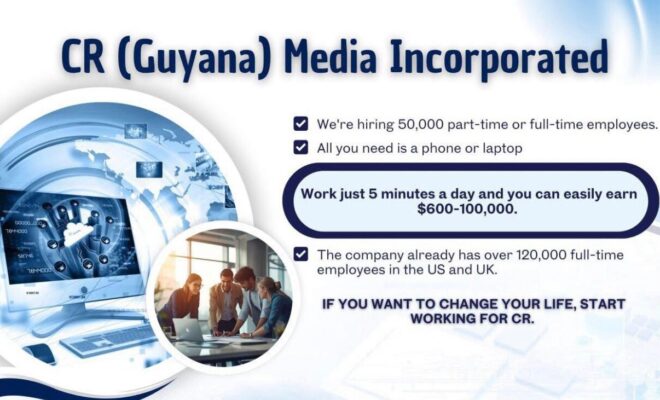
A company calling itself CR Increases Popularity, launched in mid 2025, rapidly gained traction among job seeking Guyanese, promising easy income through what appeared to be a simple digital task model. Marketed as a social media engagement platform, CR claimed to connect major celebrities seeking increased likes and visibility with everyday users paid to boost online engagement.
The pitch was deliberately appealing: employees were required to log into the CR mobile application daily, complete basic tasks—often no more than clicking a few buttons and finish their “work” in under five minutes. In return, participants were promised steady monthly earnings.
However, entry into the company came at a cost.
Prospective employees were required to pay an upfront “deposit” to secure placement within various tiers of the company, ranging from C1 to higher levels. Deposits reportedly started at approximately GYD $15,000, escalated to GYD $60,000, and in some cases exceeded one million Guyana dollars, with higher tiers promising greater monthly returns for as long as the individual remained “employed.”
While the model raised immediate red flags for some, CR continued to grow. It is now alleged that the operation defrauded more than GYD $100 million in under six months.
Public scrutiny intensified when local content creator Benel released a video questioning the legitimacy of the business. Shortly thereafter, another creator, Alex, published a more detailed exposé, presenting documentation and factual analysis that strongly suggested CR was operating as a Ponzi scheme using deposits from new recruits to pay returns to earlier participants, with no legitimate underlying revenue stream.
Further investigation revealed that CR leaned heavily on claims of both local and foreign business registration to bolster its credibility. These registrations were repeatedly cited in promotional material as proof of legitimacy, despite offering no protection or assurance to participants.
Following the viral spread of the exposé videos, CR entered full damage control mode. The company publicly denied wrongdoing, circulated messages in employee groups offering deposit-free entry, and attempted to project stability. Simultaneously, however, CR deactivated its social media pages, removed members from work groups, shut down its application, and allegedly paid at least one critic to remove a video and later act as a brand ambassador.
Additional concerns emerged when it was discovered that CR issued five-year employment contracts while its registered website domain was reportedly set to expire in August 2026, raising serious questions about long term intent.
Today, millions of dollars are believed to be lost money taken from hardworking Guyanese across age groups and backgrounds. While some public discourse has shifted toward blaming victims, critics argue this misses the larger issue: how such an operation was allowed to function openly, collect vast sums, and collapse without immediate accountability.
As authorities are urged to investigate, unanswered questions remain. How many warnings were missed? Why were regulatory safeguards ineffective? And ultimately, who benefited from a scheme that left ordinary citizens paying the price?