Bill passed to allow for cultivation of hemp, manufacturing of by-products

The Industrial Hemp Bill, Bill #10 of 2022 was on Monday night passed in the National Assembly allowing for the cultivation of the plant, manufacturing of hemp-related products and research on industrial hemp.
The Bill was tabled by Agriculture Minister Zulfikar Mustapha who noted that the passage of the bill is yet another necessary intervention by the government to provide economic opportunities for Guyanese.
“Hemp production in Guyana is a win win situation for all involved -for the grower, it will be a source for income generation and job creation; for the consumers, it would have significant benefits; and for the economy, it will be a valuable source for foreign exchange especially in the context of economic diversification,” he pointed out.
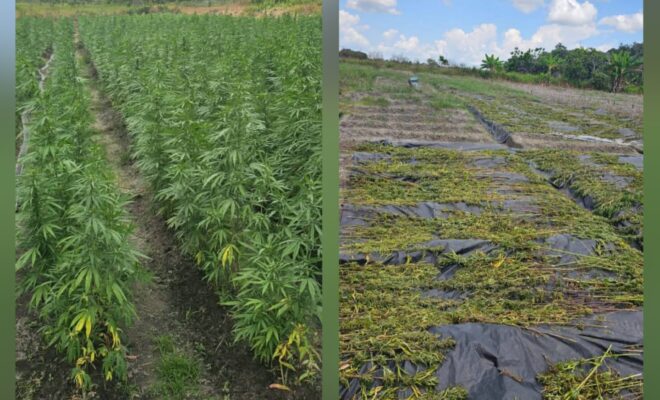
This new legislation will decriminalise the use of industrial hemp once the THC content remains less than 0.3%. As such, it protects against the cultivation of Marijuana which has a higher THC content which is the main psychoactive ingredient—that is, the substance that causes people who use marijuana to feel high.
Hemp can be used for various purposes including the production of paper, biomass fuel, clothing, construction material, healthy food and medicine among others.
The Minister noted that the demand for industrial hemp is significant and the plant can be successfully grown on a variety of soils, especially Guyana’s soil, which fits well with crop rotation.
“Hemp is very easy on the soil and returns up to 60% of the nutrients it takes from the soil, when dried in the field…Hemp is very economical crop to grow since it requires virtually no pesticide applications. Hemp is also relatively drought-resistant and has been relied upon several times during drought-induced famine for its high protein seed,” the Agriculture Minister outlined.

To effectively govern the production of industrial hemp, the legislation provides for the licensing of producers through a Guyana Industrial Hemp Regulatory Authority. The board will be made up of various stakeholders to ensure that consideration is given to public health, safety, agriculture, and commerce. The authority will also be required to work along with the Customs Anti-Narcotic Unit to monitor, supervise and control industrial hemp or related products and ensure compliance.
Licensing will be available to persons who are residents in Guyana and who are above 18 years of age, is of sound mind, and is not legally bankrupt.
Anyone caught cultivating, manufacturing, conducting research, or any other activity related to industrial hemp without a license would be liable to a fine of $500,000.00 and imprisonment for one year.
Minister Mustapha said training will be provided for interested persons and to ensure the development of a viable industry.
Section 15 (2) of the bill provides conditions to ensure that persons getting into hemp cultivation are serious about production, interested persons would be required to submit an Industrial Hemp Planting, Propagation, and Harvesting Plan for approval to the Board. The Board will be tasked with monitoring the plan’s implementation.
Further, the bill requires sampling and testing of any seed or plant before planting to confirm the prescribed THC content allowed under the law.
An important feature of this legislation is zoning. Section 23 of the bill sets out that there will be designated geographical areas for the cultivation and manufacturing of hemp. In designating such areas, consideration shall be given to the suitability of the area, the risk of diversion, the risk of contamination, economic decentralisation, and the proximity to educational institutions, public places, and residential areas frequented by children.
This is to ensure that any negative impact will be mitigated. As such, prospective locations have already been identified with significant amounts of acreages. Vulnerable communities with unemployment issues would be targeted.
As it relates to manufacturing, manufacturing licenses for processing, manufacturing, possession, buying, selling, distributing, importing, and exporting industrial hemp, seed, and hemp related products, would be issued for fifteen years and shall be renewable for a further term of 15 years as determined by the board.
In relation to enforcement, an authorised person will be employed to enforce the provisions of this legislation. Such person will be empowered under other related legislation and will have the powers to test, sample, analyse, search, intercept, and seize once a search warrant has been issued by a Magistrate.
To ensure that government keeps up to date with the development of the hemp industry, all licensees would be required to submit an annual status report of activities. Annual returns are also to be submitted by the 31st March of the following year. Failure to submit will result in a fine of two hundred thousand dollars ($200,000.00).
While the APNU+AFC Opposition members did not attend the sitting of the National Assembly, Deputy Speaker and only other member of the opposition supported the bill.