Israeli military admits role in killing of 5-Y-O Hind Rajab
August 21 2026
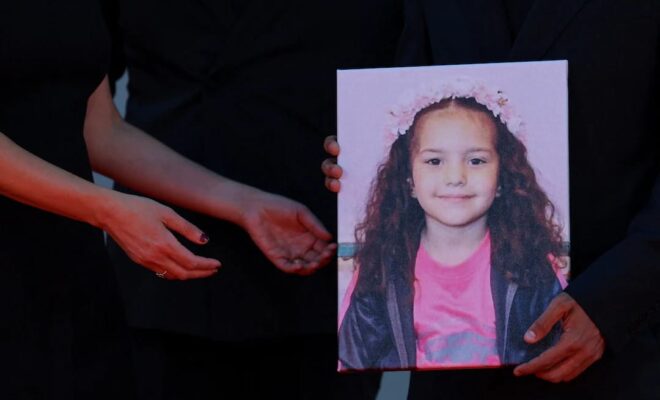
The Israeli military has acknowledged for the first time that its forces opened fire on the vehicle carrying five-year-old Palestinian girl Hind Rajab in Gaza in January 2024, reversing an earlier denial of involvement and announcing a criminal investigation into her death.
The admission marks a significant change in the military’s account of an incident that drew international attention after Rajab became trapped inside the vehicle with members of her family and made an emotional plea for help to Palestinian emergency workers.
Rajab was killed on January 29, 2024, in Gaza City. Several members of her family were also killed. An ambulance from the Palestine Red Crescent Society that was dispatched to rescue her later came under attack, killing two paramedics, according to investigations into the incident. The bodies were discovered days later.
For months, the Israeli military denied that its forces were responsible, saying that its troops were not present near the vehicle and were not within firing range. Subsequent investigations, including analyses of satellite imagery, audio and other evidence, challenged that account and placed Israeli military vehicles in the vicinity.
The Israeli military has now said that a review conducted through its internal fact-finding mechanism found that its troops had fired on the vehicle. The military attributed the decision to launch a criminal investigation to apparent failures in coordinating the movement of the Palestinian Red Crescent ambulance and other circumstances surrounding the incident.
The investigation into Rajab’s death is one of two criminal probes announced by the Israeli military following a broader review of approximately 150 incidents involving alleged misconduct during the Gaza war. The second investigation concerns the deaths of 15 Palestinian emergency and rescue workers in Rafah in March 2025.
The military also reviewed several other high-profile incidents but decided against launching criminal investigations in some cases, including the April 2024 Israeli strike that killed seven World Central Kitchen aid workers in Gaza.
The decision has drawn criticism from human-rights organizations and governments seeking greater accountability for civilian deaths.
Rajab’s death became one of the most widely recognized individual cases associated with the humanitarian toll of the Gaza war. Investigators from Forensic Architecture previously reconstructed the incident and reported evidence indicating that hundreds of rounds were fired at the vehicle.
Independent UN-appointed experts subsequently said the circumstances of Rajab’s killing could amount to a war crime.
The Israeli announcement is likely to renew questions over military accountability and the effectiveness of Israel’s internal investigations. Rajab’s family and rights advocates have called for an independent international investigation rather than relying solely on Israeli military authorities.
The case remains under criminal investigation, meaning the Israeli military’s latest admission does not itself establish criminal liability for any individual soldier or commander. Any such determination would depend on the findings and outcome of the investigation.