Barima sailed with dozens of unrecorded passengers- Cashier
Cashier placed on administrative leave after warning of overload as dozens boarded Barima off the books
November 25 2026
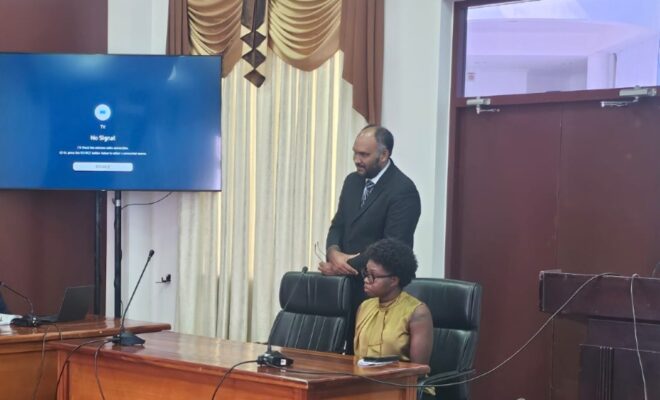
Testimony before the Commission of Inquiry into the sinking and capsizing of the MV Barima has exposed a daunting picture of unrecorded passengers, uncollected public funds, and administrative fallout at the Transport and Harbours Department, after Goods Wharf cashier Atasha Washington revealed she was placed on administrative leave following warnings she sent about excess travelers on the day of the fatal voyage.
Washington, who has worked at the Kingston wharf for two and a half years, told commissioners that when tickets sold out and passengers kept arriving, she alerted Goods Wharf superintendent Dellon Grandison that they had exceeded the passenger count for the day, receiving only the instruction to “hold on” and no further word on how to handle the crowd.
“I told them that there’s no more tickets available, so hold on,” Washington recalled telling travelers who kept returning to the window, adding that after sending a message to her supervisor about exceeding the passenger count, she received a letter signed by General Manager Yulander Hughes placing her on administrative leave alongside Grandison and traffic manager Stefan Skekel.
During intense questioning over money and headcounts, commissioners highlighted statements indicating that roughly 160 people boarded the vessel on July 18, standing 42 higher than the 118 names tallied during an in-hearing audit of department records and 44 above the 116 booked travelers Washington said should have appeared on her manifest.
Pressed on whether she had collected fares for over 40 unbooked passengers, Washington replied, “No, I would have only collected from what I would have booked,” and maintained that she had no visibility into boarding operations at the back of the wharf. “No, I was not outside, so I would not be able to see who entered from who did not,” she testified, noting that she collected cash strictly for walk-in bookings she processed, at fares of $3000 for Port Kaituma adults, $1500 for children, $2000 for Morawhanna adults, and $1000 for children, with infants under three and pensioners traveling free.
The inquiry also heard that the Transport and Harbours Department operated without any written policy setting standard overflow limits or governing passenger exemptions, relying instead on informal verbal clearances when supervisors requested management approval to exceed the system’s one hundred and twenty-five passenger ceiling.
Asked whether a written policy existed capping overflow numbers, Washington said, “I have no clue. I’ve never seen anything, and I’m only instructed by management if there is an excess,” explaining that while she always insisted on asking for a specific headcount before processing extra tickets, “there’s nothing requiring every clerk to do what you do.”
She further testified that a provisional manifest before the commission listed only 100 names despite her count of 116 issued tickets, and explained that cargo manifests were generated automatically from freight slips cashed by her and fellow cashier Ms. McLean alongside the postage clerk, emphasizing “I can only cash what I receive” while acknowledging that supervisors or superintendents could clear cargo directly without a slip reaching the cashiers.