Survivors recount ignored warnings, safety failures before MV Barima sank- COI
November 17 2026
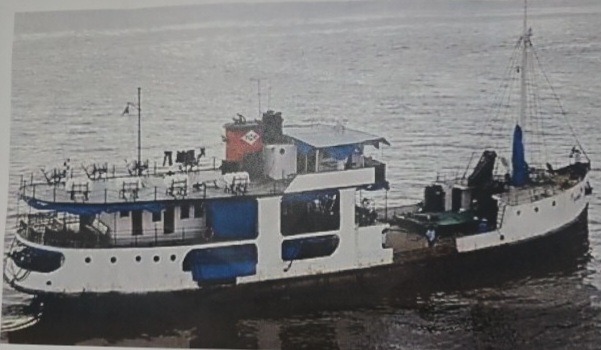
Testimonies before the Commission of Inquiry (COI) into the July 18, 2026 sinking of the MV Barima continued today and revealed that the ill-fated ferry had been officially declared “unseaworthy” in a 2021 survey report and lacked a mandatory Certificate of Survey in its official registry file, even as traumatized survivors recounted a nightmare voyage marked by failing engines, crew negligence, inaccessible life jackets, and the tragic loss of four members of a single family.
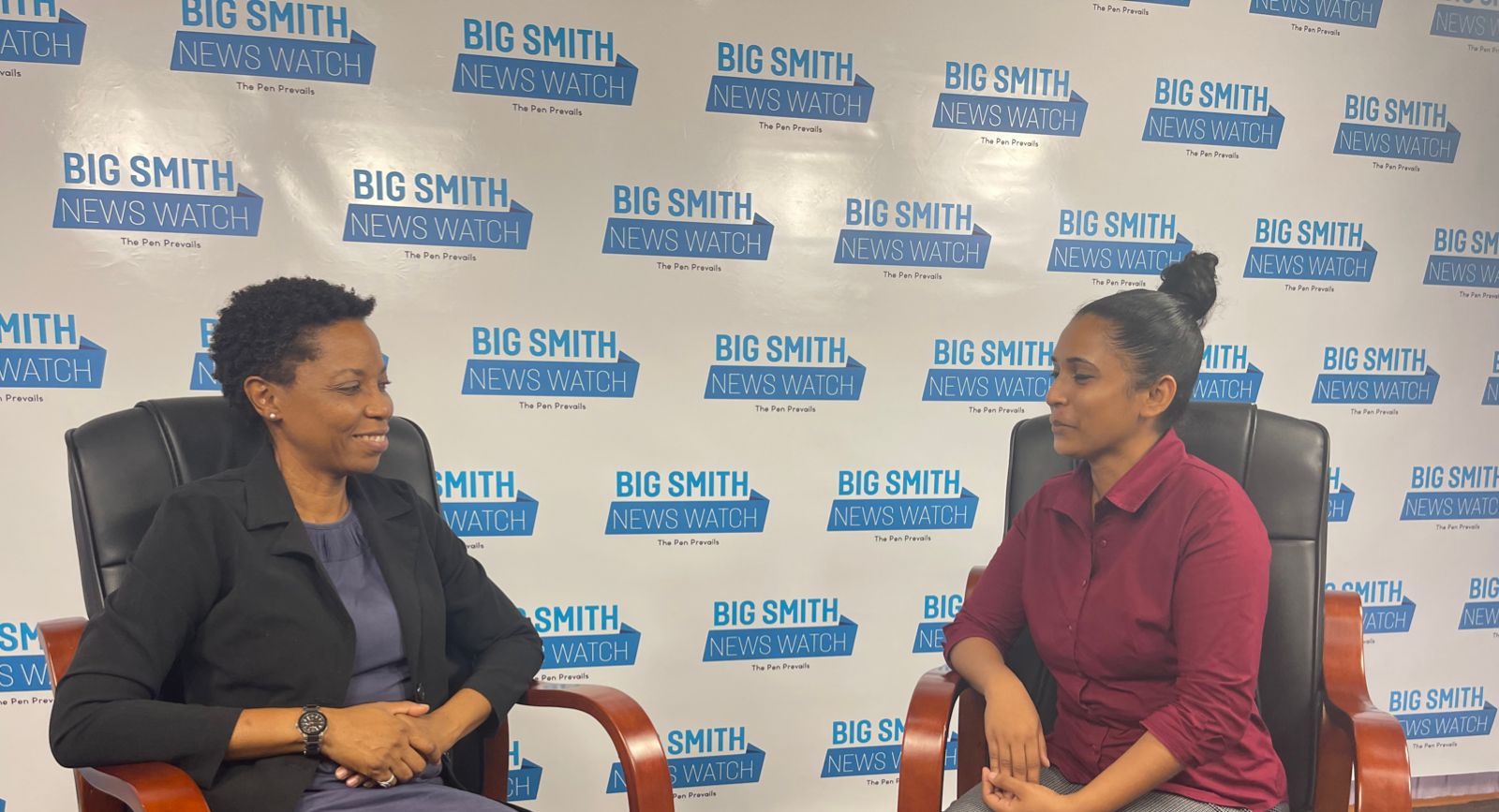
During public hearings held in the Lula Room of the Arthur Chung Conference Centre in Liliendaal, Maritime Administration Department (MARAD) Registrar of Ships Gale Culley-Greene was the first witness called to the stand.
Reading from an inspection report dated March 3, 2021, at the request of Commissioner Dr. Andrzej Jasionowski, Culley-Greene disclosed the grim findings of a prior assessment conducted while the vessel was moored in Kingston. “On January 11, 2021, a survey of the motor vessel Barima was conducted while the vessel laid afloat alongside Transport and Harbours good wharf Water Street, Kingston.
The MV Barima in its current condition is unseaworthy and requires urgent dry docking,” Culley-Greene read to the Commission.
Culley-Greene, who has served as Registrar of Ships for five years since being offered the post in 2020, presented the Commission with a physical bundle containing eight documents held together by a treasury tag.
Alongside the January 2021 survey report, the file contained a Certificate of Guyanese Registry dated October 26, 2020, the vessel’s registration particulars, and ship inspection reports dated February 12, 2025, and November 17, 2025.
Crucially, however, Culley-Greene confirmed that the file was missing a Certificate of Survey, which serves a distinct legal function from a survey report under the Guyana Shipping Act and is required to legally generate a vessel’s registration. “In order for a registration to be generated the primary document would be the certificate of survey….That’s where we would get the registration from and those documents would come from the safety division. This file does not contain certificate of survey,” she explained.
When pressed by Commissioner Dr. Jasionowski on what action would typically follow an unseaworthy declaration, Culley-Greene said she would generally contact the Director of Maritime Safety to check if a resurvey had been done.
However, she testified that she had no prior involvement with the Barima’s file before the disaster and had only received the records on the morning of her testimony. “I was asked to submit this file by the director general on the 20 July and I only received it this morning (November 17) …so I can’t speak about what’s in the file, I can’t speak about the report that was placed in the file,” she stated. She also noted that a Certificate of Registration never expires once issued, stating, “Once it’s issued its good for life,” and pointed out that MARAD’s registry operates out of a cramped space relying on manual filing cabinets that were not up to date when she took office, prompting her to recommend digitizing vessel records.
Following the regulatory disclosures, the inquiry heard gut-wrenching accounts from survivors who endured the sinking, beginning with husband and wife Adam and Carlita Matabheek.
The couple was travelling to the North West District alongside Adam’s brother, his wife, Rachel Matabheek, and their three young children Nathaniel Jr., Natalia, and Ezekiel. While Adam, Carlita, and Adam’s brother survived the ordeal, Rachel and all three children perished when the ferry went down.
Testifying after the lunch break on Tuesday, Carlita Matabheek revealed that despite explicitly warning a crew member before departure that she could not swim, she was denied a life jacket because it would take up room. “He said ‘you don’t need a life jacket, that will take up space’, but I said ‘uncle, is anything wrong? I can’t swim’, and he said no, it’s just a boat ride,” Carlita recalled. She watched another passenger step onto a bench and struggle unsuccessfully to pull a life jacket from an overhead storage area where it appeared stuck.
Carlita added that she later saw that same Transport and Harbours Department employee resting in a hammock during the voyage after telling passengers they would not see him again until they reached their destination, noting she saw no other crew members throughout the trip.
Adam Matabheek corroborated the chaotic and unsafe conditions aboard the ferry, which had been scheduled to depart at 1:00 p.m. on July 18, 2026, before finally boarding passengers at approximately 3:00 p.m. without explanation.
To reach the Barima, between 180 and 200 passengers, including numerous babies and children, had to walk across the MV Malisha, which was docked alongside it at the wharf. Once aboard, passengers were forced to sit on the floor of the heavily overcrowded middle deck because benches were piled high with bags, boxes, and cargo, while motorcycles were stored on the lower deck directly beneath where Adam stood.
As the journey progressed, mechanical failures became apparent. Adam testified that two of the vessel’s engines experienced difficulties, cutting off two or three times and leaving a single struggling engine to power the overcrowded ferry. Survivor Rajwan Komar, who was travelling on the MV Barima for the very first time, also testified on Tuesday afternoon that he looked into the engine room and saw engineers attempting to fix a problem. Komar, who described the cargo layout as “chaotic,” realized shortly after departure that the ferry was taking on water, but his warning was brushed aside by staff. “I told them, they look at me very rude and rolled their eyes and just walked away,” Komar told the Commission.
Around 9:00 p.m., Adam woke from a nap to find the vessel leaning noticeably to its right side, prompting him and his brother to question whether the crew was following the proper route. By approximately 10:15 p.m., as the ferry travelled close enough to the Essequibo Coast near Anna Regina that passengers could see car headlights and street lights ashore, the MV Barima suddenly executed a sharp turn away from the coastline and headed straight out into deeper, rougher waters. “At a sudden the boat just mek one turn heading out into the deep again and at the time it just enter into the shaky water, with the wave and it just mek one go down, in couple seconds,” Adam recounted.
Inside the cabin, the lights flickered and died as the vessel rolled violently. Carlita grabbed onto a bench and tried to alert her sister-in-law before the ferry tilted sharply, sending cargo and passengers crashing across the floor. “I hold onto the bench, I wake my sister-in-law up and I tell she a boat like it ah sink gal,” Carlita testified, adding that Rachel stood up only to fall as a loud noise echoed through the hull and water rushed in. “I didn’t know what to do. It happened so fast that the water come and then the boat start to go to the front,” she said.
Komar, reading from a statement he wrote four days after the disaster, described the exact same moment of terror as the ferry listed sharply to the right and another passenger yelled, “What’s happening? The boat is sinking.” Thrown across the deck by shifting cargo, Komar’s final memory before being buried beneath crashing goods and bodies was seeing a small baby flung helplessly across a bench while terrified passengers cried out, “Oh God” and “Oh my God,” before surging water piled people on top of one another.
No alarm ever sounded, and no warning was given to the sleeping passengers. Adam attempted to pry a life jacket from the locked cage or compartment above the passenger deck, but failed and was forced to jump into the dark ocean as the ferry rolled over, briefly exposing its hull before disappearing beneath the waves. Thrown into the sea unable to swim, Carlita surfaced clutching a piece of a life jacket as another woman grabbed her hand to keep her afloat. “When I came up, I was holding onto a piece of a life jacket. When I catch my breath, the water coming in… it’s hard,” she testified. Hearing her desperate cries for him, Rachel, and the children, Adam swam to her side and reunited with his brother, holding onto one another through the night until a volunteer passenger boat rescued four survivors, including Adam, Carlita, and Adam’s brother, the next morning, transferring them to a Coast Guard vessel for up to two hours before they were taken to the Charity Hospital for food and medical care.
Meanwhile, trapped beneath the sinking vessel, Komar fought for his life as his lungs burned and his strength faded. “For one moment I truly felt that I was dying, but something in me refused to give up. I fought harder than I ever fought in my entire life. Nothing short of a miracle, I found an opening and broke through the waters,” he testified. Surfacing beside the upturned bottom of the MV Barima, he swam toward two floating life jackets and distanced himself from the wreck, watching in horror as passengers who stayed too close were sucked down. “They disappeared. I never ever saw them again,” he said.
Clinging to a floating box, Komar placed his first emergency call to 911 at 10:58 p.m. “I remember telling them the MV Barima sank, all of us was in the water and we need your help,” he recounted. Although dropping cell signals and unfamiliarity with his phone’s maps initially prevented him from giving dispatchers exact coordinates while they alerted the Anna Regina Coast Guard, Komar later reached the Regional Police Commander for Region One and used offline maps on his device to establish his position, reassuring nearby survivors that help was coming until a Coast Guard boat rescued him and brought him to Charity. Komar also submitted videos and photographs he recorded during the ordeal, prompting Commissioner Dr. Jasionowski to praise him as a “hero” and note that his footage was the most helpful evidence provided by any witness so far.
The five-member Commission of Inquiry continues its public hearings as it investigates the vessel’s seaworthiness, maintenance history, boarding and cargo procedures, crew competence, and emergency response to determine whether negligence, misconduct, or dereliction of duty led to the fatal disaster.