Mojtaba Khamenei becomes Iran’s Supreme Leader
March 9 2026
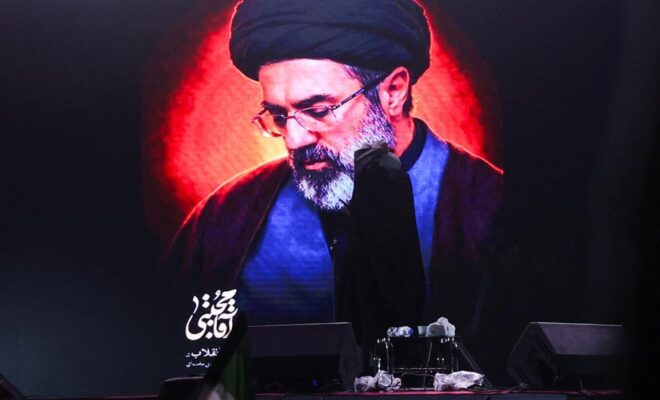
Iran has entered a new political era after Ayatollah Mojtaba Khamenei was officially appointed the country’s Supreme Leader, succeeding his father, Ayatollah Ali Khamenei, whose death during U.S. Israeli strikes in late February 2026 triggered a swift leadership transition.
The powerful clerical body known as the Assembly of Experts confirmed Mojtaba’s appointment on March 8, 2026, making him the third Supreme Leader of the Islamic Republic since the 1979 revolution.
Mojtaba Khamenei, 56, has long been a quiet but influential figure inside Iran’s ruling establishment. A cleric educated in the seminaries of Qom, he previously worked within his father’s office and developed strong ties with the Islamic Revolutionary Guard Corps (IRGC) and conservative clerical networks.
Although he held no elected office before the appointment, analysts say his behind-the-scenes influence over political and security institutions made him a leading contender to inherit Iran’s most powerful post.
The transition marks a historic moment for the Islamic Republic. Critics argue the succession resembles a dynastic transfer of power, something the revolutionary system originally rejected after overthrowing the monarchy in 1979.
Mojtaba’s rise comes at a moment of extraordinary crisis. Iran remains embroiled in a widening regional conflict involving the United States and Israel, with missile strikes, drone attacks, and military operations affecting several countries across the Middle East. The turmoil has disrupted global energy markets and driven oil prices sharply higher.
Despite international scrutiny, Iran’s political and military institutions have publicly rallied behind the new leader, pledging loyalty as he assumes command of the country’s armed forces, judiciary, and key state institutions.
World powers have reacted quickly. Russia signaled strong support for Tehran’s new leadership, while officials in Washington criticized the appointment and warned of continued confrontation with the Iranian regime.
With tensions across the Middle East escalating and Iran facing economic and military pressure, Mojtaba Khamenei now steps into one of the most powerful and contested positions in global politics tasked with guiding the Islamic Republic through what analysts describe as the most dangerous moment in its modern history.