Venezuela’s Power Struggle: Two Women, One Nation and the Man in the Middle
January 15 2025
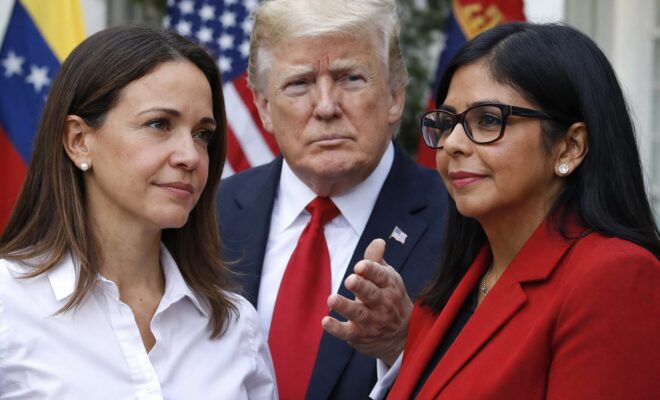
In the wake of one of the most dramatic shifts in Venezuelan politics in decades, two female leaders have emerged as symbols of competing visions for the future of their country and both now find themselves jockeying for influence with the most powerful man in Washington, U.S. President Donald Trump. Their rivalry is shaping the fate of Venezuela at a pivotal moment, as the nation reels from economic collapse, political upheaval, and renewed international pressure.
María Corina Machado, the charismatic and internationally recognized opposition figure, stands on one side of this new political divide. A longtime critic of authoritarian rule in Venezuela, Machado gained global attention and the 2025 Nobel Peace Prize for her steadfast opposition to the regime of Nicolás Maduro, whom U.S. forces removed and captured in a surprise operation earlier this month. Despite surviving years of political marginalization and personal risk, Machado now finds herself abroad and navigating the treacherous waters of international diplomacy as she seeks support for democratic transition back at home.
Her rival, acting President Delcy Rodríguez, occupies the official seat of power in Caracas. Once the vice president under Maduro and a high-ranking member of his political apparatus, Rodríguez has taken a pragmatic pivot since assuming leadership. She now publicly embraces selective cooperation with the United States, including the release of political prisoners and overtures to resume economic ties especially in the crucial oil sector. These moves have earned Trump’s cautious praise, even as Rodríguez faces backlash from hardliners within her own former regime and skepticism from Venezuelans who see her as a continuity figure of the old order.
At the center of their intertwined bids for legitimacy stands President Trump, whose administration’s actions have reshaped Venezuela’s political landscape in unexpected ways. After a series of military and economic pressures including sanctions, tanker seizures, and a powerful U.S. naval presence in the CaribbeanTrump’s government has signaled a willingness to engage directly with Rodríguez’s interim government and with Machado’s opposition movement alike.
Trump’s motives, however, remain as complex as they are controversial. While he has spoken positively of Rodríguez and welcomed increased cooperation even discussing significant oil sales from Venezuela to the United States he has also agreed to host Machado for high-level talks in Washington, spotlighting her democratic credentials and Nobel distinction. The White House’s approach has been described by analysts as transactional and fluid, reflecting economic interests, geopolitical strategy, and domestic political calculations all at once.
Inside Venezuela, the stakes could not be higher. Machado’s supporters argue that only a true democratic transition, recognized internationally and backed by robust civic participation, can pull Venezuela out of its years of humanitarian crisis and economic contraction. Her critics, including many within Rodríguez’s camp, see her as disconnected from the realities of governance and prone to foreign dependency. Meanwhile, Rodríguez must balance the demands of external stakeholders with the lingering loyalty of military and political figures tied to Maduro’s ousted administration.
Political analysts warn that whichever leader secures Trump’s favor and the accompanying economic and security support from Washington may gain a decisive edge in shaping Venezuela’s future. But the path forward remains uncertain, shaped by intense internal divisions, international pressure, and a country yearning for stability after years of turmoil.
• Machado is expected to continue her diplomatic engagements in Washington this week, seeking concrete commitments from U.S. policymakers.
• Rodríguez faces mounting pressure domestically to deliver economic relief and genuine reform.
• The Trump administration’s evolving stance could redefine the balance of power in Caracas, with oil, security cooperation, and political legitimacy all playing central roles.
This unfolding saga underscores a broader truth: Venezuela’s future will not be decided solely in Caracas it will be shaped by global power dynamics and the strategic choices of two determined leaders and a president with his own ambitious agenda.
(Sources: CNN Network, WRAL News, Reuters, PBS)