Guyana defends Essequibo as ICJ hearings begin
May 4 2026
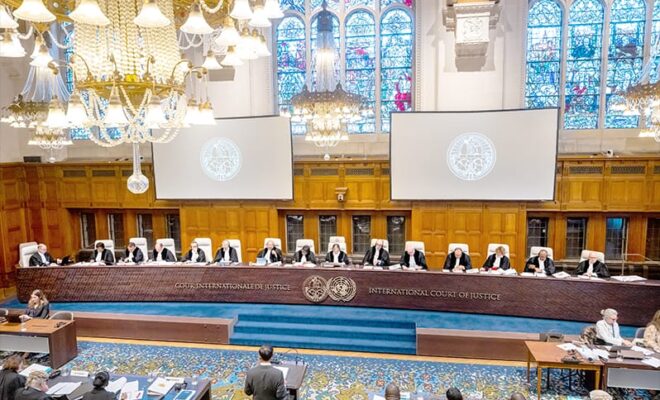
The International Court of Justice on Monday opened oral proceedings in the high-profile case filed by Guyana against Venezuela, signaling a critical phase in the long-running dispute over the Essequibo region. The hearings, taking place in The Hague, are focused on determining the legal standing of the 1899 Arbitral Award, which Guyana maintains conclusively defined the border between the two states.
Representing Guyana, Minister of Foreign Affairs and International Cooperation Hugh Hilton Todd told the court that the 1899 ruling constituted a “full, perfect and final settlement” of the border.
He emphasized that the arbitral tribunal comprised of judges from the United Kingdom, the United States, and Russia unanimously determined the boundary, and that Venezuela accepted and adhered to the ruling for more than six decades without objection. According to Guyana, this long-standing acceptance was reflected in Venezuela’s official maps, legislation, and international agreements up until at least 1962.
Todd further pointed to a 1905 agreement between Venezuela and the United Kingdom, acting on behalf of British Guiana, which formally demarcated the boundary in accordance with the 1899 Award. He argued that both the award and subsequent agreement are legally binding under international law, dismissing Venezuela’s current objections as baseless and raised far too late to hold legal merit. Guyana maintains that the established boundary remains lawful and that Venezuela is obligated to respect it and refrain from any activities within Guyanese territory.
Venezuela, however, continues to challenge the legitimacy of the 1899 settlement, claiming it was the result of collusion between the United States and Britain and asserting that it never consented to the agreement. In contrast, Guyana insists that Venezuela was fully involved in the arbitration process, having participated in deliberations and correspondence leading up to the final decision.
The case is part of Guyana’s wider push to obtain a definitive and legally binding settlement to the territorial dispute, which centers on a resource rich area covering over two-thirds of its territory.
A decision from the court, anticipated in the coming months, could finally provide long-sought legal certainty to one of South America’s longest-running border conflicts.